
Key Takeaways
- IoT devices often ship with weak default security, making them easy entry points for attackers.
- A single compromised device can expose an entire home or business network.
- Botnets built from hacked IoT devices now reach record breaking attack sizes.
- Healthcare and industrial IoT carry added physical safety risks, not just data risks.
- Strong passwords, updates, and network segmentation cut most IoT risk quickly.
Internet of things devices pose risks of unauthorized access, data breaches, botnet recruitment, and physical safety harm. Most of these risks trace back to weak default passwords, missing software updates, and devices left exposed on shared networks without proper segmentation or monitoring.
What Risk Is Posed by Internet of Things Devices
I started auditing client networks years ago and IoT devices kept surprising me. A smart camera or thermostat looked harmless on paper. In practice, it often had the weakest password on the whole network.
That gap is the core answer to what risk is posed by internet of things devices. Connected devices expand a network’s attack surface far faster than security teams can track them. Every camera, sensor, or smart plug is a small computer that can be hijacked.
IoT devices commonly expose users to unauthorized access, data breaches, and botnet recruitment. Attackers use compromised devices to move deeper into a network. Physical devices like locks and cameras add a safety risk layer that ordinary laptops do not carry.
This risk is not theoretical or limited to large enterprises. Home networks, small offices, and hospitals all share the same exposure. The scale differs, but the underlying weaknesses stay remarkably consistent.
Common Types of IoT Devices at Risk
Not all connected devices carry equal risk, though most carry some. The categories below attract the most attacker attention.
- Smart home devices, including cameras, doorbells, and voice assistants, collect audio, video, and behavioral data continuously.
- Wearables and health trackers sync with mobile apps and cloud accounts, exposing health data alongside location history.
- Industrial sensors and building automation systems control real world processes and can disrupt operations or create safety hazards.
- Networking hardware, such as routers and IoT hubs, sits at the center of every other connected device on the network.
How IoT Devices Get Compromised
Most IoT breaches do not involve advanced hacking skills. Attackers rely on default usernames and passwords that owners never change. Search engines even index which devices still use factory settings.
Firmware updates are another weak point across the industry. Many manufacturers stop supporting older models within a few years. Once support ends, known vulnerabilities remain open on the device forever.
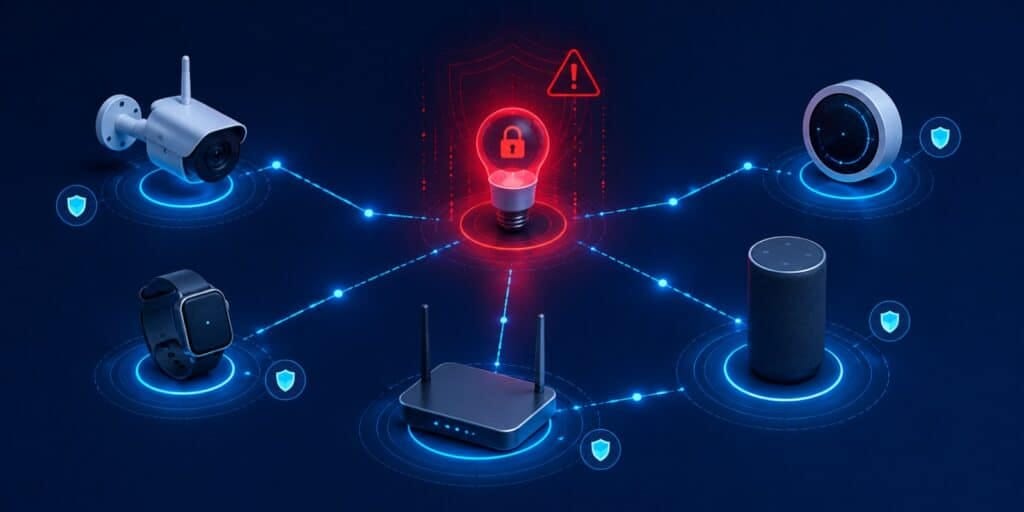
Unsecured network connections make the problem worse for everyone. Devices connected to the same Wi Fi as laptops and phones share risk. One compromised smart bulb can become a doorway into sensitive files.
Weak authentication on cloud dashboards adds a further layer of exposure. Many people managing IoT fleets rely on a single password login. Without multi factor authentication, one leaked password can expose dozens of devices.
Insecure mobile apps paired with IoT devices open another path in. Some apps transmit data without proper encryption in place. Attackers intercepting that traffic can capture credentials or personal information directly.
Unauthorized Access and Data Breaches
Connected devices constantly collect data about the people around them. Smart speakers record audio, cameras capture video, and wearables track health data. All of that information becomes valuable once an attacker gains access.
Data breaches through IoT devices often go unnoticed for months. A hacked baby monitor or doorbell rarely triggers an obvious alarm. Attackers can quietly harvest data long before anyone notices anything wrong.
This is why the internet of things security field, related to the wider internet of things ecosystem, treats data exposure as a top concern. Weak device security directly threatens personal privacy. Businesses face regulatory and financial consequences from the same gap.
Stolen data from IoT devices frequently ends up resold on dark web marketplaces. Credentials, video footage, and location histories all carry resale value. This turns a single weak device into an ongoing privacy problem.
Botnets and DDoS Attacks
Hijacked IoT devices are frequently recruited into large botnets. These botnets combine thousands of compromised devices under one attacker’s control. The Mirai botnet remains the clearest historical example of this tactic.
- The Mirai botnet remains the clearest historical example of this tactic.
- Newer botnet families have reportedly reached over 20 terabits per second in DDoS attacks.
- Supply chain campaigns like BadBox have compromised more than 10 million devices before shipping.
- Botnet activity often runs silently, letting a device keep working normally while sending attack traffic.
Physical Safety Risks From Connected Devices
Not every IoT risk stays confined to data and screens. Smart locks, medical devices, and industrial sensors control physical outcomes directly. A breach here can affect safety, not only privacy.
Internet of medical things devices illustrate this danger clearly. Connected infusion pumps and monitors manage real patient care in hospitals. A manipulated reading or delayed alert could genuinely endanger someone’s health.
Industrial and building systems carry similar physical stakes. Compromised access control panels can unlock secure facilities remotely. Attackers gaining control of building sensors can disrupt safety systems entirely.
Vehicles and transportation systems increasingly rely on connected sensors as well. Compromising these systems could interfere with navigation or safety features. This category is expected to draw more attacker attention going forward.
IoT Risk by Industry
| Industry | Primary Risk | Real World Example |
| Healthcare | Patient data exposure and device manipulation | Connected infusion pumps and monitors face manipulation risks |
| Manufacturing | Production disruption and supply chain compromise | Industrial sensors targeted for espionage and sabotage |
| Smart Homes | Unauthorized access and privacy loss | Hijacked cameras and doorbells used for surveillance |
| Retail | Payment and customer data theft | Point of sale IoT devices targeted for card data |
| Utilities | Physical infrastructure disruption | Grid sensors targeted in coordinated attacks |
The Financial Cost of Poor IoT Security
IoT related incidents carry a real financial weight for organizations. Industry data places the average IoT security incident cost around 330,000 dollars. Healthcare breaches involving connected medical devices often exceed 10 million dollars.
These figures show why IoT risk is a business issue. It is not only a technical concern for IT teams. Leadership at every level now needs basic awareness of these risks.
Smaller organizations face a disproportionate impact from these costs. Fewer resources exist to absorb a major breach or system outage. Prevention remains far cheaper than recovery in nearly every case.
Insurance providers are also adjusting policies around connected device risk. Some now require documented security practices before offering full coverage. This trend is pushing basic IoT hygiene into standard business practice.
Regulatory Pressure Is Reshaping IoT Security
Governments are pushing manufacturers toward stronger baseline security standards. The EU Cyber Resilience Act introduces new reporting duties starting September 2026. Vendors will need to report actively exploited vulnerabilities within 24 hours.
CISA has also expanded its guidance beyond traditional IT systems. Its Cybersecurity Performance Goals now unify IT, IoT, and OT security expectations. This reflects how closely connected devices now sit to critical infrastructure.
These regulatory shifts matter for everyday buyers as well as enterprises. Products built to meet these standards tend to ship safer by default. Checking for compliance labels is becoming a practical buying habit.
How to Reduce IoT Security Risks
Reducing IoT risk does not require advanced technical skills for most users. A few consistent habits close most of the common gaps. The following steps apply to homes and small businesses alike.
- Change every default password before connecting a new device.
- Keep firmware and apps updated as soon as patches release.
- Place IoT devices on a separate network from computers and phones.
- Disable remote access features that are not actually needed.
- Review connected device permissions and data collection settings regularly.
- Retire devices once the manufacturer stops releasing security updates.
Organizations should add device inventories and monitoring to this list. Knowing exactly what is connected makes unusual activity easier to spot. Segmentation and least privilege access limit damage if a device is compromised.
IoT Network Security Best Practices
A few core practices form the foundation of strong IoT network defense.
- Network segmentation keeps IoT devices separate from computers and phones, limiting attacker movement if one device is compromised.
- Least privilege access restricts each device to only the specific services it needs.
- Cloud based management portals controlling IoT fleets need strong authentication, since individual devices often have limited login protections.
- Logging and monitoring allow security teams to correlate unusual activity across dozens or hundreds of connected devices.
IoT Security Versus Traditional Device Security
Traditional computers and IoT devices do not face security in the same way.
- Laptops receive frequent updates and run established antivirus software, while many IoT devices lack both.
- Traditional IT teams have mature asset management and monitoring tools for laptops and servers.
- IoT devices frequently fall outside those same monitoring systems, leaving blind spots.
- This gap explains why attackers increasingly target connected devices as the easier entry point.
Why IoT Risk Keeps Growing
The number of connected devices continues to climb every year. Industry estimates place global IoT connections above 21 billion in 2026 alone. That volume is expanding faster than most security teams can monitor.
AI powered attack tools are adding new pressure to this trend. Attackers now automate scanning and exploitation across huge device populations at once. This makes manual, one device at a time security unworkable long term.
Awareness remains the most practical defense available right now. Understanding what risk is posed by internet of things devices helps users make better choices. Simple habits still block the large majority of real world attacks.
FAQs
What is the biggest risk of IoT devices?
Unauthorized access through weak or default passwords remains the most common IoT risk. It often leads directly to data breaches or botnet recruitment.
Can IoT devices be hacked easily?
Many IoT devices can be hacked easily if default settings are never changed. Missing firmware updates make this problem significantly worse over time.
Do smart home devices spy on users?
Smart home devices collect data by design, including audio, video, and usage patterns. A security breach can expose that data to unauthorized parties.
Is IoT security improving in 2026?
Regulations like the EU Cyber Resilience Act are pushing manufacturers toward stronger security in 2026. Enterprise adoption of zero trust IoT frameworks is also increasing this year.
How can I check if my IoT device is secure?
Check whether the device still receives manufacturer updates and uses a strong unique password. Review its network permissions and disable any unused remote access features.
Are older IoT devices more dangerous to keep using?
Older IoT devices become more dangerous once manufacturer support and updates stop entirely. Replacing unsupported devices reduces exposure to known, unpatched vulnerabilities.
Security guidance from CISA on securing the Internet of Things offers additional practical steps for households and organizations working to close these gaps.