

Small machines can teach surprisingly big lessons. When you look closely at a miniature engine, you can see how individual components work together to create movement. For hobbyists who enjoy mechanical projects, a semto engine can provide an engaging way to explore this process through hands-on building and observation. Instead of learning about mechanical systems only from books or videos, builders can work directly with miniature engine components and watch the finished mechanism operate.
The appeal of these engines goes beyond their compact size. They combine detailed construction, mechanical movement, and the satisfaction of creating something that actually works.
Why Miniature Engines Are So Fascinating
A full-sized engine can be difficult to understand because its components are large, complex, and often hidden inside the machine. A miniature engine brings many of these mechanical ideas into a much smaller and more visible format.
Builders can examine how parts connect and observe how movement passes from one component to another. Pistons, crankshafts, cylinders, connecting rods, and other components each have a role in the overall operation.
This makes miniature engines useful for anyone who wants to understand basic mechanical principles. The experience is practical, visual, and much easier to connect with than simply memorizing technical terms.
The Build Is Just as Important as the Result
One of the most rewarding parts of working with an engine model is the assembly process. At first, the project may look like a collection of small metal components. Step by step, those pieces begin forming a recognizable mechanical system.
The process requires attention to detail. Parts need to be placed correctly, connections need to be checked, and assembly instructions need to be followed carefully.
This can also make the hobby a useful exercise in problem-solving. If the finished mechanism does not work as expected, builders have to look back at the assembly and find the possible issue.
That process teaches an important engineering habit: understand the problem before trying to fix it.
Watching Engineering Come to Life
The most exciting moment often comes when the completed engine begins to move.
A stationary collection of components suddenly becomes a coordinated mechanical system. Rotating parts turn, pistons move, and connected components work together in a sequence.
Seeing this movement helps explain why precision is so important in engineering. A small component may have a significant effect on the operation of the entire system. When everything is assembled correctly, the result demonstrates how careful design and coordination can create smooth mechanical motion.
For hobbyists, this can be far more satisfying than simply displaying a finished model.
Exploring CISON Engine Kits
Different miniature engines can offer different building experiences. Some hobbyists may enjoy exploring one style of mechanism, while others want to compare designs and take on new challenges.
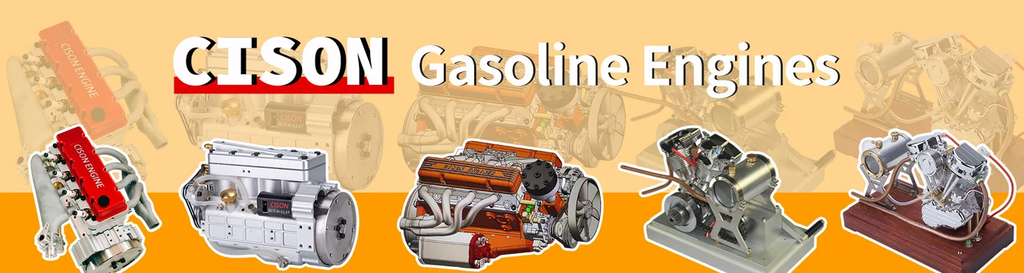
A cison engine kit gives enthusiasts another way to explore detailed miniature engine models. The CISON collection on EngineDIY focuses on engine models designed for people who enjoy mechanical building and the visual appeal of working miniature machinery.
These kits can be especially interesting for hobbyists who appreciate the details found in real mechanical systems. Working through a build allows them to examine components closely while gaining a better understanding of how the finished mechanism operates.
The important thing is to choose a project that matches your experience and interests. A good kit should provide a challenge while still keeping the building process enjoyable.
Where Mechanical Curiosity Becomes a Project
EngineDIY provides a platform where hobbyists can explore miniature engines, mechanical models, and hands-on engineering projects. Its collections include different engine models and kits, giving enthusiasts several ways to discover the world of miniature machinery.
This approach makes engineering more approachable. You do not need to be a professional engineer to become interested in how engines work. A small project on a workbench can be enough to introduce concepts such as mechanical movement, precision, and component interaction.
Completing one engine can also encourage builders to explore another. Over time, the hobby can become a way to develop practical knowledge while enjoying the process of building.
Small Scale, Real Learning
Miniature engine projects can teach more than mechanical concepts. They can also encourage patience, concentration, and careful thinking.
When something does not operate correctly, the builder needs to investigate. They may need to check a connection, review an assembly step, or understand how two components interact. Each small problem becomes an opportunity to learn.
There is also a sense of creativity involved. Builders can become curious about different engine designs and how various mechanisms produce movement.
That combination of technical learning and hands-on activity is what gives miniature engines their lasting appeal.
Final Thoughts
SEMTO engines and CISON kits show that serious engineering does not always need to come in a full-sized package. Even a compact engine can demonstrate important ideas about precision, movement, design, and mechanical coordination.
The real attraction lies in the journey. You begin with individual components, carefully bring them together, solve problems along the way, and eventually watch the machine move.
For anyone fascinated by how things work, miniature engines offer a practical and enjoyable way to experience engineering one small component at a time.