
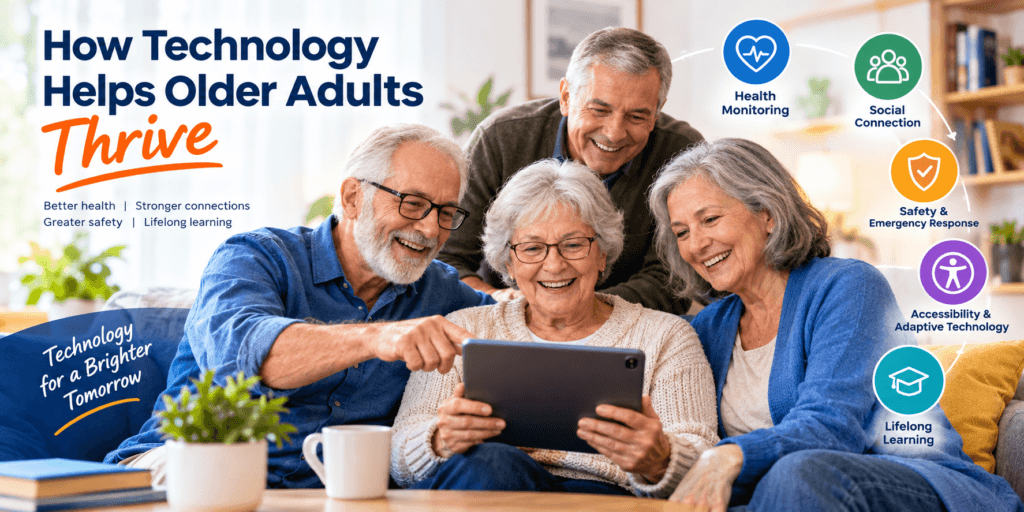
What if the device in your pocket could help you maintain independence, stay connected to loved ones, and manage your health more effectively? Technology has transformed how older adults navigate daily life, offering practical solutions that support wellness, communication, safety, and personal growth. From health monitoring tools to virtual learning opportunities, today’s technology can help older adults remain engaged, informed, and connected.
1. Health Monitoring and Medical Management
Wearable devices have changed how many older adults track and manage their health. Smartwatches and fitness trackers can monitor heart rate, sleep patterns, physical activity, and other wellness indicators. Many devices also include fall-detection features that can notify emergency contacts if a fall is detected.
Medication reminder applications can help individuals manage prescription schedules, minimizing the risk of missed doses. Remote monitoring technology may also allow healthcare providers to review health information without requiring frequent in-person visits.
These tools can make it easier for older adults to stay informed about their health and work collaboratively with healthcare professionals. By providing timely information and reminders, technology supports greater confidence in daily health management.
2. Social Connection and Family Bonding
Technology makes it easier than ever for older adults to stay connected with family and friends, regardless of distance. Video calls allow grandparents to see loved ones in real time, creating more meaningful interactions than traditional phone calls alone.
Social media platforms help older adults reconnect with longtime friends, share experiences, and participate in communities centered around hobbies and interests. Digital communication tools also make it simple to exchange photos, celebrate milestones, and stay informed about the lives of family members.
Online games, virtual discussion groups, book clubs, and hobby communities create additional opportunities for social engagement. These connections can help foster a sense of belonging and encourage ongoing participation in meaningful relationships.
3. Safety and Emergency Response Systems
Modern technology offers a variety of tools that support safety and provide peace of mind for both older adults and their families.
Medical alert systems allow users to request help quickly during emergencies. Many devices now include automatic fall detection and emergency response features. Smart home technology can also improve safety through video doorbells, automated lighting, and remote monitoring capabilities.
For older adults who value both independence and personalized support, Liberty Place offers assisted living services within a community environment where modern safety features and supportive resources contribute to resident well-being and confidence.
Technology-driven safety tools help create a supportive environment where older adults can maintain greater independence while remaining connected to assistance when needed.
4. Accessibility and Adaptive Technology
Technology has become increasingly accessible for individuals with varying abilities and needs. Voice-activated assistants can perform tasks such as turning lights on and off, setting reminders, making calls, or providing information through simple spoken commands.
Devices with adjustable text sizes, screen magnification tools, and audio features help individuals with vision changes access information more comfortably. Similarly, hearing support technologies and closed-captioning features make communication and entertainment more accessible.
Speech-to-text functionality can also assist people who experience difficulty typing or using traditional input devices. By reducing barriers to technology use, these innovations allow older adults to engage more fully with digital tools and services.
5. Cognitive Engagement and Lifelong Learning
Technology provides countless opportunities for continued learning and mental stimulation. Educational platforms, virtual classes, podcasts, digital libraries, and instructional videos allow older adults to pursue personal interests and develop new skills.
Brain-training applications, puzzles, and strategy games offer additional opportunities for cognitive engagement. Whether exploring a new language, learning a musical instrument, studying history, or researching a favorite hobby, older adults can access educational resources from virtually anywhere.
This ability to continue learning supports curiosity, encourages personal growth, and helps individuals remain intellectually engaged throughout their lives.
Conclusion
Technology has become an important resource for supporting independence, connection, and quality of life among older adults. Through health management tools, communication platforms, safety systems, accessibility features, and educational resources, technology helps individuals stay engaged with the people and experiences that matter most. As innovations continue to evolve, older adults have increasing opportunities to use technology in ways that support wellness, dignity, and personal choice. Embracing these tools can help foster greater confidence, stronger relationships, and a more connected and fulfilling daily life.